Dessert
Sugar candy
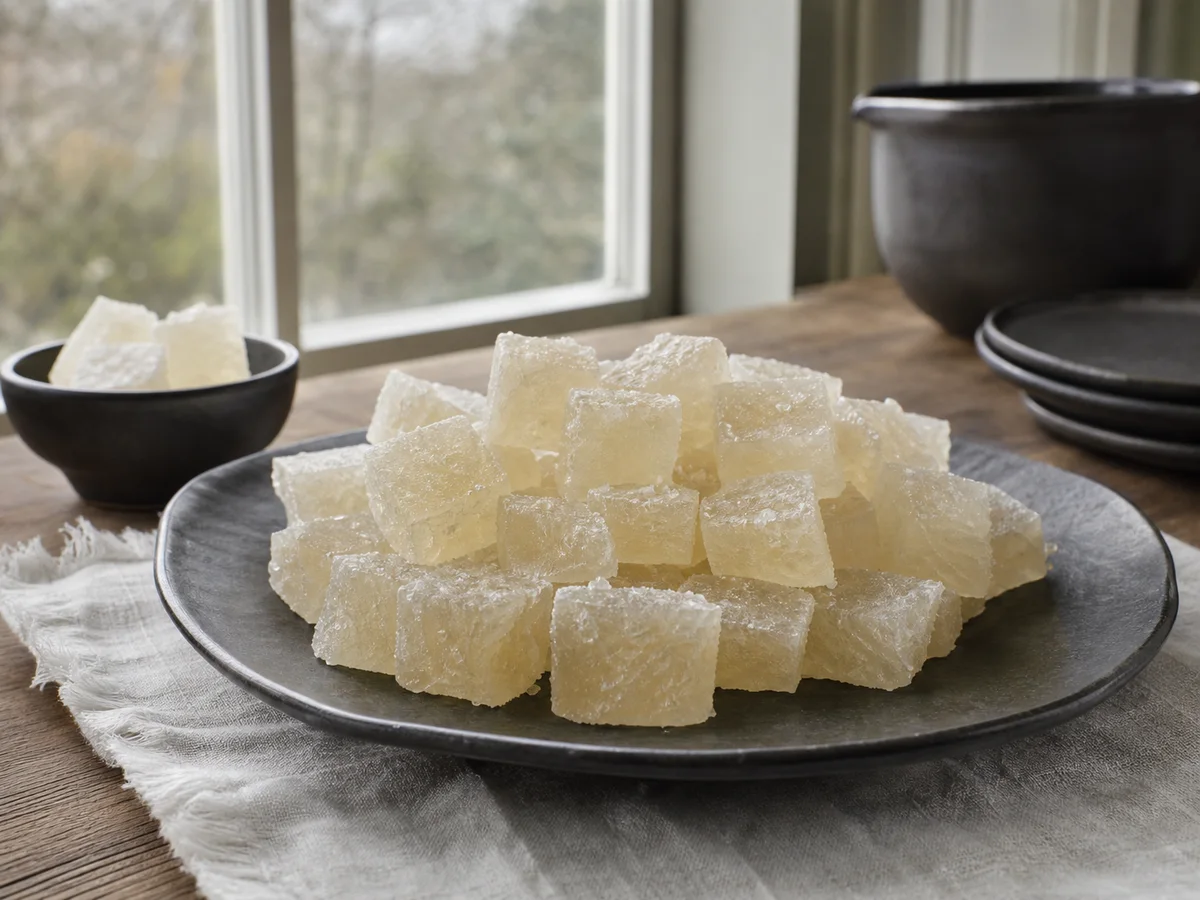
Sugar candy, preserved from Marion Harland’s 1903 cookbook with ingredient cues including wet two heaping cupfuls of granulated sugar with a half pint of cold water and put o.
Prep, cook, and serving values are clearly labeled editorial estimates. This transcription still needs a verified yield and modern kitchen adaptation before WorkLife will allow it to create a shopping cart.
From the cited source
Source ingredient cues
These cues were extracted from the historical method for discovery. Use the complete source method and citation alongside them.
- Wet two heaping cupfuls of granulated sugar with a half pint of cold water and put over the fire in a porcelain-lined saucepan.
- When the sugar is dissolved, stir in a bit of cream of tartar (as large as a Lima bean) dissolved in a spoonful of cold water.
- Boil the candy until a bit hardens when dropped into cold water;
- remove from the fire, stir in a teaspoonful of vanilla, turn into greased pans, mark into squares and set aside to harden.
Historical transcription
Source method
- 1
Wet two heaping cupfuls of granulated sugar with a half pint of cold water and put over the fire in a porcelain-lined saucepan. When the sugar is dissolved, stir in a bit of cream of tartar (as large as a Lima bean) dissolved in a spoonful of cold water. Boil the candy until a bit hardens when dropped into cold water; remove from the fire, stir in a teaspoonful of vanilla, turn into greased pans, mark into squares and set aside to harden. Or, as the candy cools, pull it with buttered finger-tips into long white ropes. Let it get very cold and brittle before eating.
Nutrition pending
No invented nutrition numbers.
WorkLife will publish nutrition and scalable serving quantities only after this historical transcription receives a measured modern adaptation.