Dinner
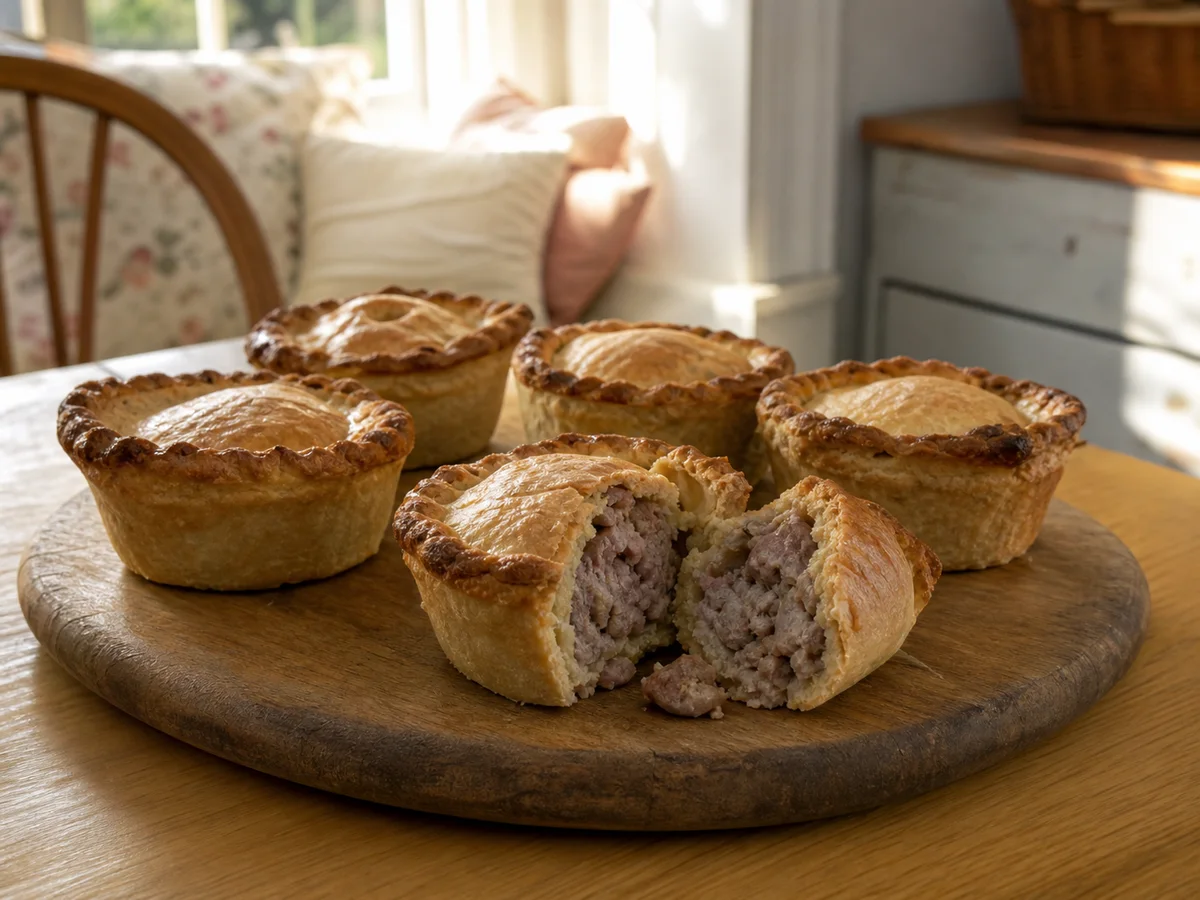
Small pork pies
Marion Harland’s original method for Small pork pies, retained as a source transcription for modern discovery.
Prep, cook, and serving values are clearly labeled editorial estimates. This transcription still needs a verified yield and modern kitchen adaptation before WorkLife will allow it to create a shopping cart.
From the cited source
Source ingredient cues
These cues were extracted from the historical method for discovery. Use the complete source method and citation alongside them.
- (A Devonshire recipe.) Chop fine a quarter of a pound of beef kidney suet and mix with it an equal quantity of butter.
- Rub both into a pound of flour and set all over the fire in a saucepan until the butter and suet are melted and the flour very hot.
- There should be about two pounds of the neck of pork, and this should be cut into very small pieces, seasoned liberally with salt, pepper and a teaspoonful of powdered sage, and cooked gently for twenty-five minutes before it goes into the pie.
Historical transcription
Source method
- 1
(A Devonshire recipe.)
- 2
Chop fine a quarter of a pound of beef kidney suet and mix with it an equal quantity of butter. Rub both into a pound of flour and set all over the fire in a saucepan until the butter and suet are melted and the flour very hot. Knead together then into a stiff paste, cover with the cloth and put it near the fire while you make ready the meat. There should be about two pounds of the neck of pork, and this should be cut into very small pieces, seasoned liberally with salt, pepper and a teaspoonful of powdered sage, and cooked gently for twenty-five minutes before it goes into the pie. The paste must then be divided into as many pieces as you wish to have pies, and these must be made into round shapes—“built up” into the shape of round pies. The way to do this must be studied carefully, for it is a knack in itself. The fist is put into the middle of the piece of dough from which the pie is to be raised, and by working it in a circular fashion the hollow is formed which is to receive the meat. The process should really be seen to be adequately understood. When the pie is “raised” the meat is put into it, a round of paste laid on the top and its edge pinched to that of the lower crust. It is then baked in a steady, rather slow, oven.
Nutrition pending
No invented nutrition numbers.
WorkLife will publish nutrition and scalable serving quantities only after this historical transcription receives a measured modern adaptation.