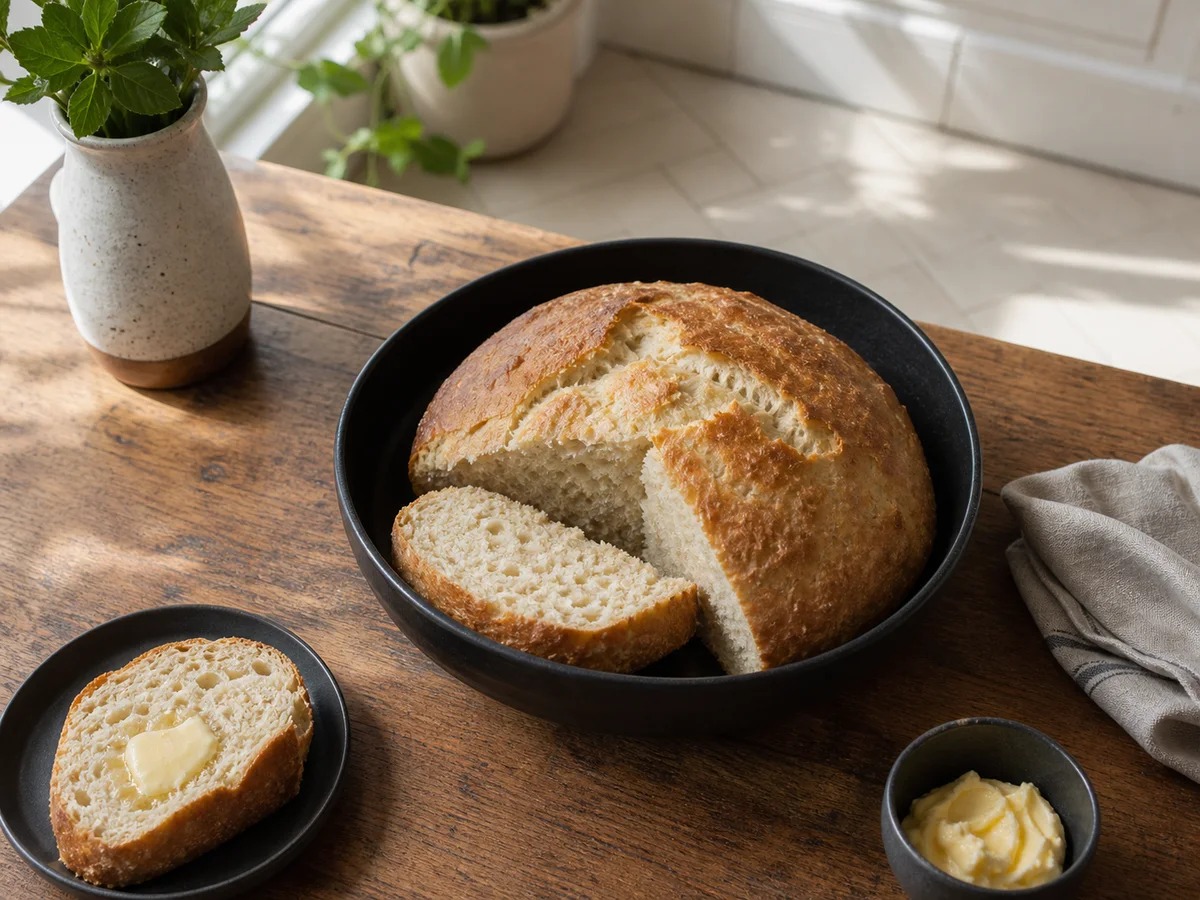
Breakfast
“Salt-rising” bread (No. 1)
A page-cited historical breakfast recipe from Marion Harland, transcribed with its original method.
Prep, cook, and serving values are clearly labeled editorial estimates. This transcription still needs a verified yield and modern kitchen adaptation before WorkLife will allow it to create a shopping cart.
From the cited source
Source ingredient cues
These cues were extracted from the historical method for discovery. Use the complete source method and citation alongside them.
- (An old Virginia recipe) Dissolve a half-teaspoonful of salt in two cups of scalding water, and beat in gradually enough flour to make a very soft dough.
- Beat for ten minutes, cover and set in a very warm place for eight hours.
- Now stir a teaspoonful of salt into a pint of lukewarm milk and add enough flour to make a stiff batter before working it into the risen dough.
- Turn into a wooden bowl and knead in enough flour to make the batter of the consistency of ordinary bread dough.
Historical transcription
Source method
- 1
(An old Virginia recipe)
- 2
Dissolve a half-teaspoonful of salt in two cups of scalding water, and beat in gradually enough flour to make a very soft dough. Beat for ten minutes, cover and set in a very warm place for eight hours. Now stir a teaspoonful of salt into a pint of lukewarm milk and add enough flour to make a stiff batter before working it into the risen dough. Mix thoroughly, cover, and set again in a warm place to rise until very light. Turn into a wooden bowl and knead in enough flour to make the batter of the consistency of ordinary bread dough. Make into loaves and set these to rise, and, when light, bake.
Nutrition pending
No invented nutrition numbers.
WorkLife will publish nutrition and scalable serving quantities only after this historical transcription receives a measured modern adaptation.