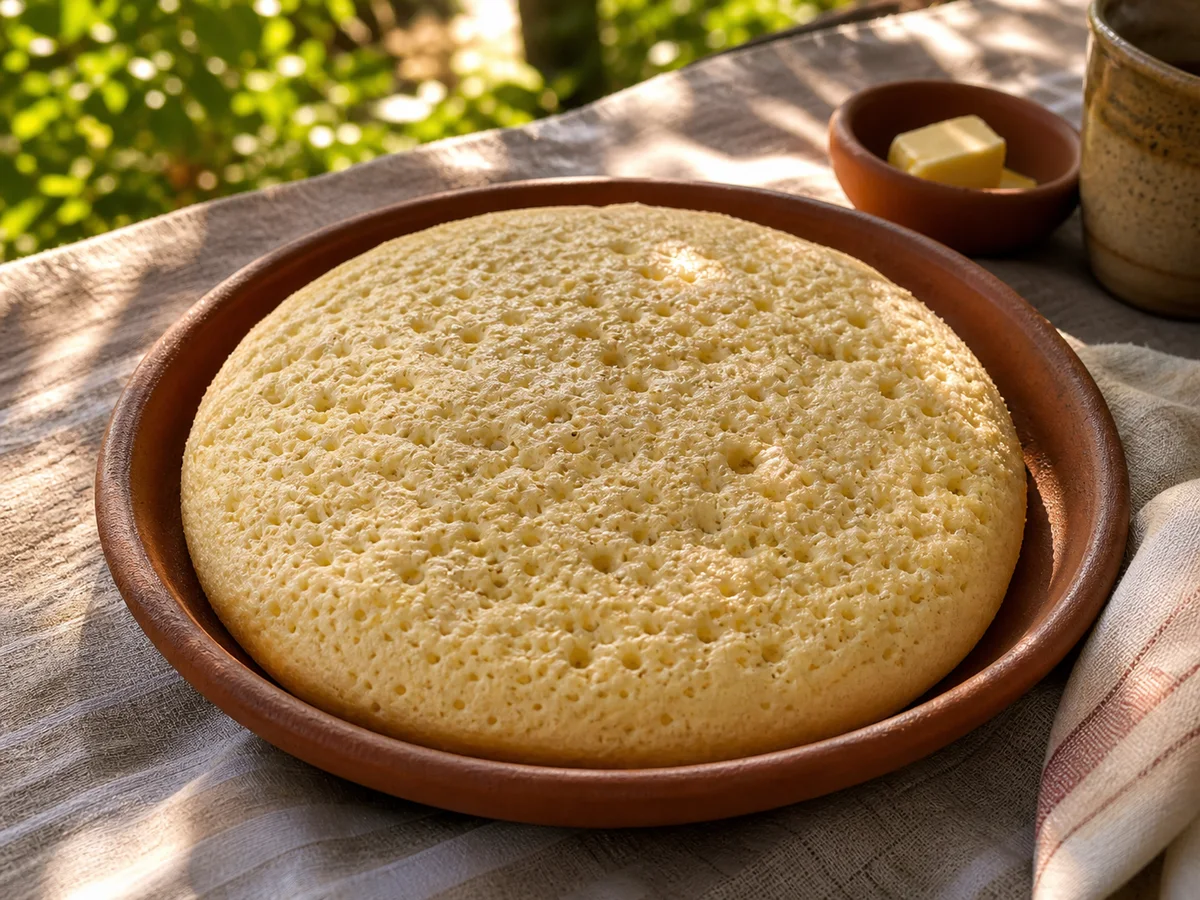
Breakfast
Potato sponge bread (No. 1)
Potato sponge bread (No. 1), preserved from Marion Harland’s 1903 cookbook with ingredient cues including boil and mash, while hot, four potatoes of fair size, beating into them a tablespoon.
Prep, cook, and serving values are clearly labeled editorial estimates. This transcription still needs a verified yield and modern kitchen adaptation before WorkLife will allow it to create a shopping cart.
From the cited source
Source ingredient cues
These cues were extracted from the historical method for discovery. Use the complete source method and citation alongside them.
- Boil and mash, while hot, four potatoes of fair size, beating into them a tablespoonful, each, of cottolene or other fat and of white sugar.
- Beat smooth, adding, gradually, one and one-half pints of lukewarm water.
- Strain through a colander upon a pint of sifted flour.
- When you have a lumpless batter, add half a cake of compressed yeast, dissolved in four tablespoonfuls of warm water.
- In four hours in summer, and six in winter, the sponge should be light and the top broken by air bubbles.
- Have ready in another deep bowl or tray five pints of dried flour of the best quality, sifted with a tablespoonful of salt.
- Hollow a space in the middle and work the sponge gradually into the flour with a clean, cool, bare hand, well floured to hinder the dough from sticking to it.
- Rinse the bowl out with a little warm water and work into the dough in order to get all the sponge.
- Flour the board and knead the ball of dough, always working from the outside of the ball toward the middle.
- After ten minutes’ hard work, turning the dough over and over and around and around, the dough should be so elastic that if you deal it a smart blow with your fist the indentation will fill up again instantly.
- When it has risen to double the original bulk—in four or six hours—return to the board and knead again, quickly and vigorously, for eight or ten minutes.
- Make into loaves and set to rise in pans, filling each half-full.
- Cover with a cloth, let all rise for an hour, or until the pans are two-thirds full, and bake.
- See that the ovens are “just right” by holding your naked arm in one.
- If you can hold it there comfortably for one whole minute and not more, you may put in the bread.
- Or try the oven with a little flour put upon a tin plate and set well back in the closed oven.
- It should be delicately touched with brown in five minutes if the oven be right.
- In ten minutes open the oven door very cautiously, and if you see the pans filled to the top, cover with light-brown “grocer’s paper” to prevent the crust from hardening before the heart of the loaf is done.
Historical transcription
Source method
- 1
Boil and mash, while hot, four potatoes of fair size, beating into them a tablespoonful, each, of cottolene or other fat and of white sugar. Beat smooth, adding, gradually, one and one-half pints of lukewarm water. Strain through a colander upon a pint of sifted flour. When you have a lumpless batter, add half a cake of compressed yeast, dissolved in four tablespoonfuls of warm water.
- 2
This is your sponge. Set in a moderately warm place in a bread-bowl with a perforated cover. If you have not this cover, throw a double fold of mosquito net or cheese-cloth over the bowl.
- 3
In four hours in summer, and six in winter, the sponge should be light and the top broken by air bubbles. Have ready in another deep bowl or tray five pints of dried flour of the best quality, sifted with a tablespoonful of salt. Hollow a space in the middle and work the sponge gradually into the flour with a clean, cool, bare hand, well floured to hinder the dough from sticking to it.
- 4
The dough should be just stiff enough to handle. When you can lift it to the kneading-board without spilling, it is ready. Rinse the bowl out with a little warm water and work into the dough in order to get all the sponge. Flour the board and knead the ball of dough, always working from the outside of the ball toward the middle. After ten minutes’ hard work, turning the dough over and over and around and around, the dough should be so elastic that if you deal it a smart blow with your fist the indentation will fill up again instantly.
- 5
Return to the mixing bowl, cover and leave as before, out of drafts in a steady temperature. When it has risen to double the original bulk—in four or six hours—return to the board and knead again, quickly and vigorously, for eight or ten minutes. Make into loaves and set to rise in pans, filling each half-full. Cover with a cloth, let all rise for an hour, or until the pans are two-thirds full, and bake.
- 6
Have a steady fire, with coal enough to last until the baking is over. See that the ovens are “just right” by holding your naked arm in one. If you can hold it there comfortably for one whole minute and not more, you may put in the bread. Or try the oven with a little flour put upon a tin plate and set well back in the closed oven. It should be delicately touched with brown in five minutes if the oven be right.
- 7
In ten minutes open the oven door very cautiously, and if you see the pans filled to the top, cover with light-brown “grocer’s paper” to prevent the crust from hardening before the heart of the loaf is done. Ten minutes before the hour for baking is up remove the papers and let the top crust brown.
- 8
Turn out the loaves carefully upon a cloth, propping them against a pan or other clean object, that they may not get sodden in cooling. Do not put into the bread-box until they are entirely cold. The box should have a cloth in the bottom, and another thrown over the bread before the box is closed.
Nutrition pending
No invented nutrition numbers.
WorkLife will publish nutrition and scalable serving quantities only after this historical transcription receives a measured modern adaptation.