Dinner
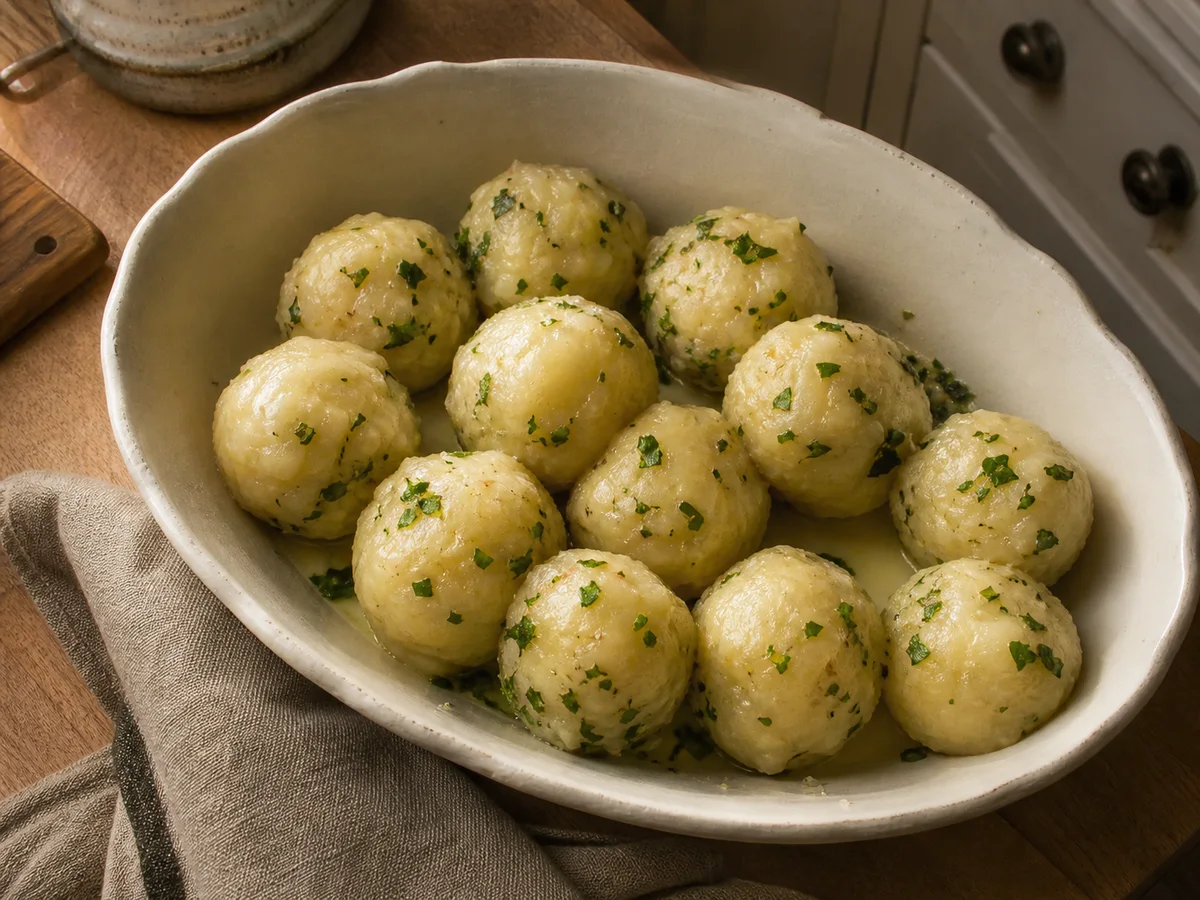
Potato balls (“Kartoffelklösse”)
Potato balls (“Kartoffelklösse”), preserved from Marion Harland’s 1903 cookbook with ingredient cues including three cupfuls of potatoes, one cupful of bread, two eggs, well-beaten, separately.
Prep, cook, and serving values are clearly labeled editorial estimates. This transcription still needs a verified yield and modern kitchen adaptation before WorkLife will allow it to create a shopping cart.
From the cited source
Source ingredient cues
These cues were extracted from the historical method for discovery. Use the complete source method and citation alongside them.
- Three cupfuls of potatoes, one cupful of bread, two eggs, well-beaten, separately;
- pepper, salt and nutmeg to taste, and some chopped parsley that has been heated in butter.
- The bread should be prepared as for croutons, crusts removed, cut in squares, browned in butter in the oven, then crushed.
- Mold into small balls and drop into boiling, well-salted water;
- keep water boiling for fifteen minutes, when the klösse should be about twice the original size and done to the cen ter.
- They may be served with bread-crumbs browned in butter, placed on the top of each dumpling, or with tomato sauce.
- If too moist, use flour or bread-crumbs in molding.
Historical transcription
Source method
- 1
Peel, boil and mash potatoes; put aside to cool.
- 2
Three cupfuls of potatoes, one cupful of bread, two eggs, well-beaten, separately; pepper, salt and nutmeg to taste, and some chopped parsley that has been heated in butter. The bread should be prepared as for croutons, crusts removed, cut in squares, browned in butter in the oven, then crushed. The mixture should be very stiff. Mold into small balls and drop into boiling, well-salted water; keep water boiling for fifteen minutes, when the klösse should be about twice the original size and done to the cen ter. They may be served with bread-crumbs browned in butter, placed on the top of each dumpling, or with tomato sauce. With chopped meat filling the center of the dumplings they can also be varied. If too moist, use flour or bread-crumbs in molding. A good cook has the knack of dropping from the spoon without molding, but this is hard to do. The klösse should be the size of small apples when finished. Americans very often use a trifle of baking-powder to insure lightness in these. Germans depend on good beating.
Nutrition pending
No invented nutrition numbers.
WorkLife will publish nutrition and scalable serving quantities only after this historical transcription receives a measured modern adaptation.