Dinner
Oranges
Marion Harland’s original method for Oranges, retained as a source transcription for modern discovery.
Prep, cook, and serving values are clearly labeled editorial estimates. This transcription still needs a verified yield and modern kitchen adaptation before WorkLife will allow it to create a shopping cart.
From the cited source
Source ingredient cues
These cues were extracted from the historical method for discovery. Use the complete source method and citation alongside them.
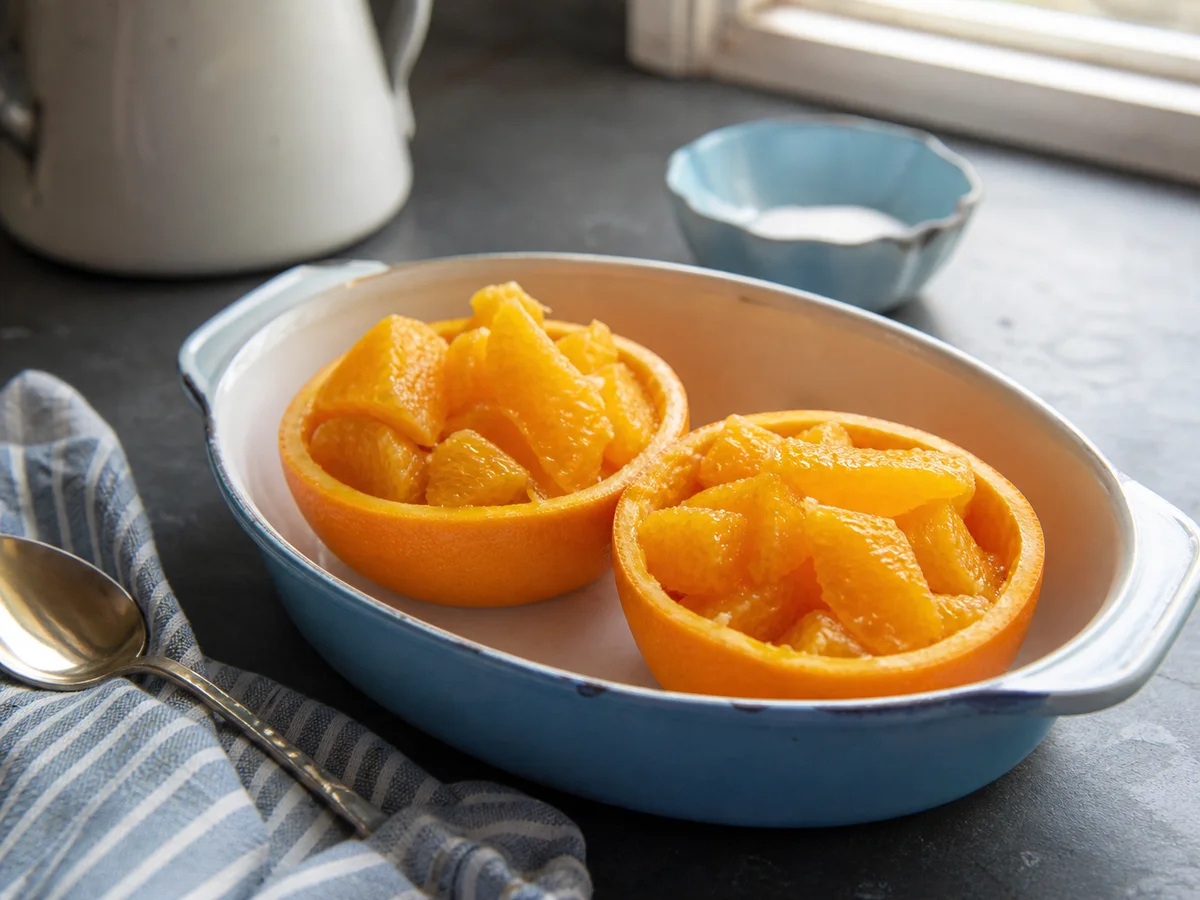
- Cut in half, crosswise, and dig out the pulp with a silver or gold orange spoon.
- Take these membranes out carefully, leaving the pulp in the two cups of the halved orange.
- separate the lobes and cut each into three pieces.
- Serve in a chilled glass dish, passing powdered sugar for those who like it.
- Breakfast fruits are far more wholesome when eaten without sugar.
Historical transcription
Source method
- 1
1. Cut in half, crosswise, and dig out the pulp with a silver or gold orange spoon.
- 2
2. They are yet nicer prepared beforehand by running a sharp knife on the inside, close to the rind, thus severing the membranes that divide the lobes. Take these membranes out carefully, leaving the pulp in the two cups of the halved orange. It can be then eaten as easily as a custard could be. Set on ice until you are ready to serve.
- 3
3. Peel the oranges; separate the lobes and cut each into three pieces. Serve in a chilled glass dish, passing powdered sugar for those who like it.
- 4
Breakfast fruits are far more wholesome when eaten without sugar.
Nutrition pending
No invented nutrition numbers.
WorkLife will publish nutrition and scalable serving quantities only after this historical transcription receives a measured modern adaptation.