Dinner
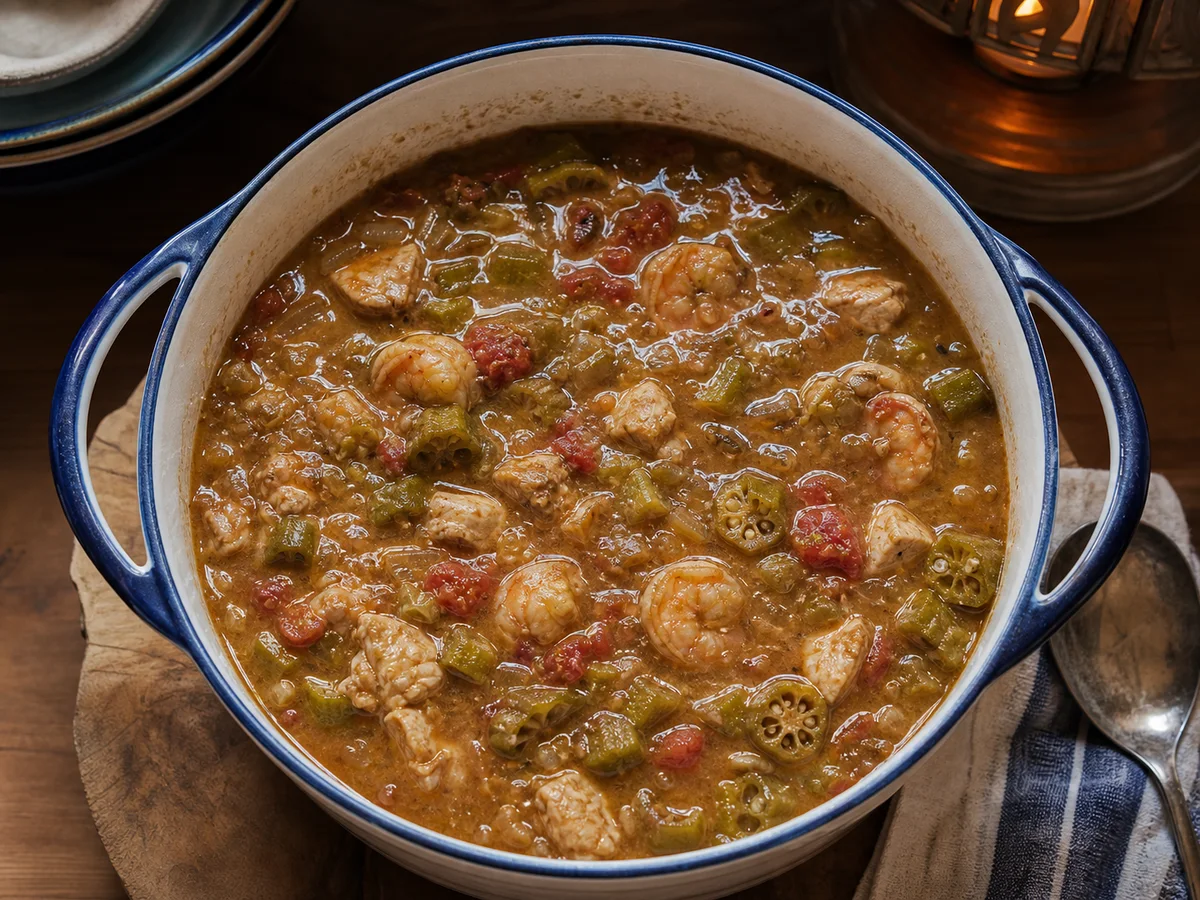
Gumbo (No. 2)
A page-cited historical dinner recipe from Marion Harland, transcribed with its original method.
Prep, cook, and serving values are clearly labeled editorial estimates. This transcription still needs a verified yield and modern kitchen adaptation before WorkLife will allow it to create a shopping cart.
From the cited source
Source ingredient cues
These cues were extracted from the historical method for discovery. Use the complete source method and citation alongside them.
- Brown one small onion in a heaping tablespoonful of butter.
- Add one quart of sliced okra, and fry it well, stirring all the time to prevent burning.
- Now add half a gallon of hot water and let it cook until simmered down to one quart.
- Add three ripe tomatoes and the chicken, or oysters, or shrimps.
- If the chicken is used it must have been previously stewed tender, in which case use the broth instead of the hot water.
- Season to taste with salt and cayenne, and serve with a tablespoonful of rice for each soup-plate.
Historical transcription
Source method
- 1
This delicious soup may be made with oysters, or shrimps, or chicken. Brown one small onion in a heaping tablespoonful of butter. Add one quart of sliced okra, and fry it well, stirring all the time to prevent burning. Now add half a gallon of hot water and let it cook until simmered down to one quart. Add three ripe tomatoes and the chicken, or oysters, or shrimps. If the chicken is used it must have been previously stewed tender, in which case use the broth instead of the hot water. Season to taste with salt and cayenne, and serve with a tablespoonful of rice for each soup-plate.
Nutrition pending
No invented nutrition numbers.
WorkLife will publish nutrition and scalable serving quantities only after this historical transcription receives a measured modern adaptation.