Dessert
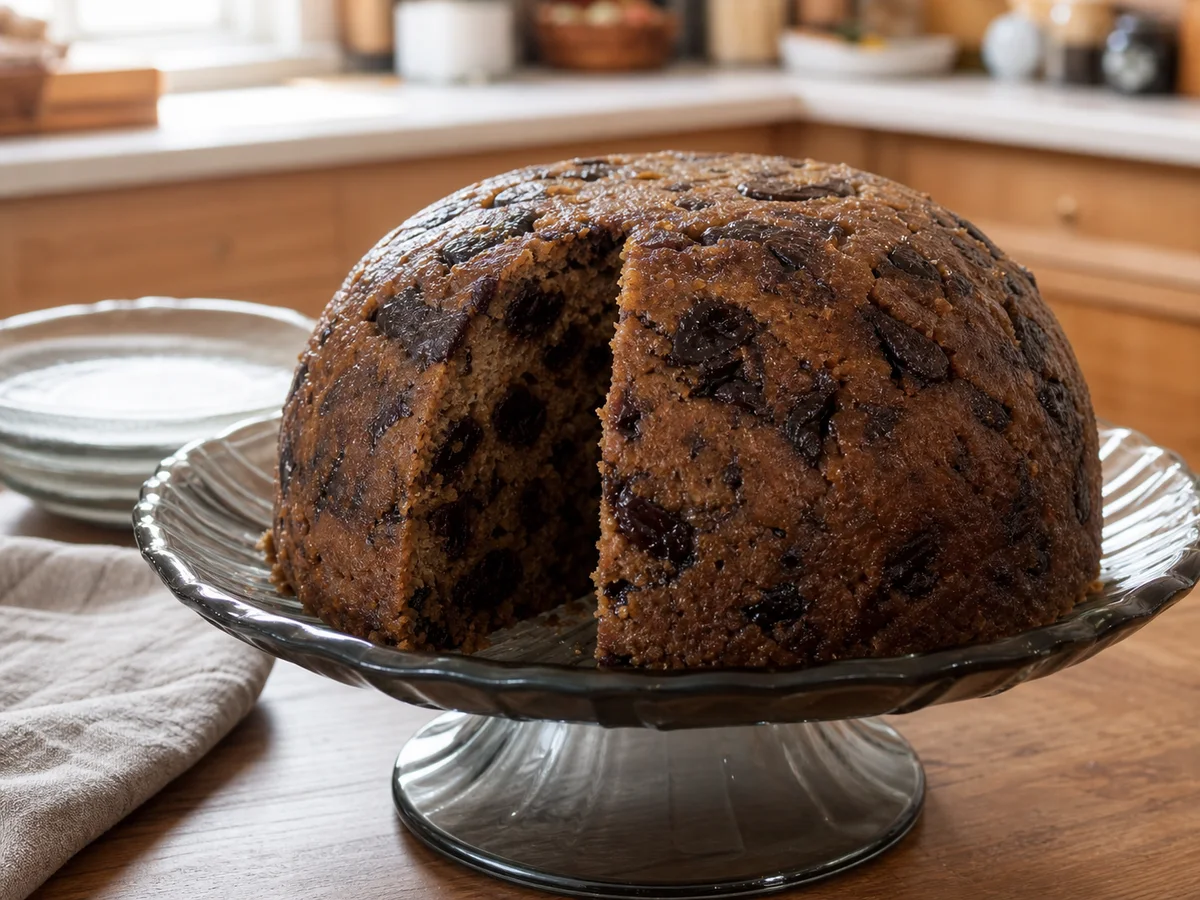
Boiled prune pudding
Boiled prune pudding, preserved from Marion Harland’s 1903 cookbook with ingredient cues including stew a pound and a half of prunes.
Prep, cook, and serving values are clearly labeled editorial estimates. This transcription still needs a verified yield and modern kitchen adaptation before WorkLife will allow it to create a shopping cart.
From the cited source
Source ingredient cues
These cues were extracted from the historical method for discovery. Use the complete source method and citation alongside them.
- Stew a pound and a half of prunes;
- when cold remove the stones and cut each prune into four pieces.
- Into a half cupful of powdered suet stir a half cupful of powdered sugar, two beaten eggs, a gill of milk, a gill of the prune liquor and a scant pint of flour, sifted with a half teaspoonful of baking-powder and a saltspoonful of salt.
- Beat all thoroughly together, and, last of all, add the quartered prunes, thoroughly dredged with flour.
- Turn into a greased pudding mold with a closely fitting top and boil for two and a half hours.
Historical transcription
Source method
- 1
Stew a pound and a half of prunes; when cold remove the stones and cut each prune into four pieces. Into a half cupful of powdered suet stir a half cupful of powdered sugar, two beaten eggs, a gill of milk, a gill of the prune liquor and a scant pint of flour, sifted with a half teaspoonful of baking-powder and a saltspoonful of salt. Beat all thoroughly together, and, last of all, add the quartered prunes, thoroughly dredged with flour. Turn into a greased pudding mold with a closely fitting top and boil for two and a half hours. Eat hot with hard sauce.
Nutrition pending
No invented nutrition numbers.
WorkLife will publish nutrition and scalable serving quantities only after this historical transcription receives a measured modern adaptation.