Dinner
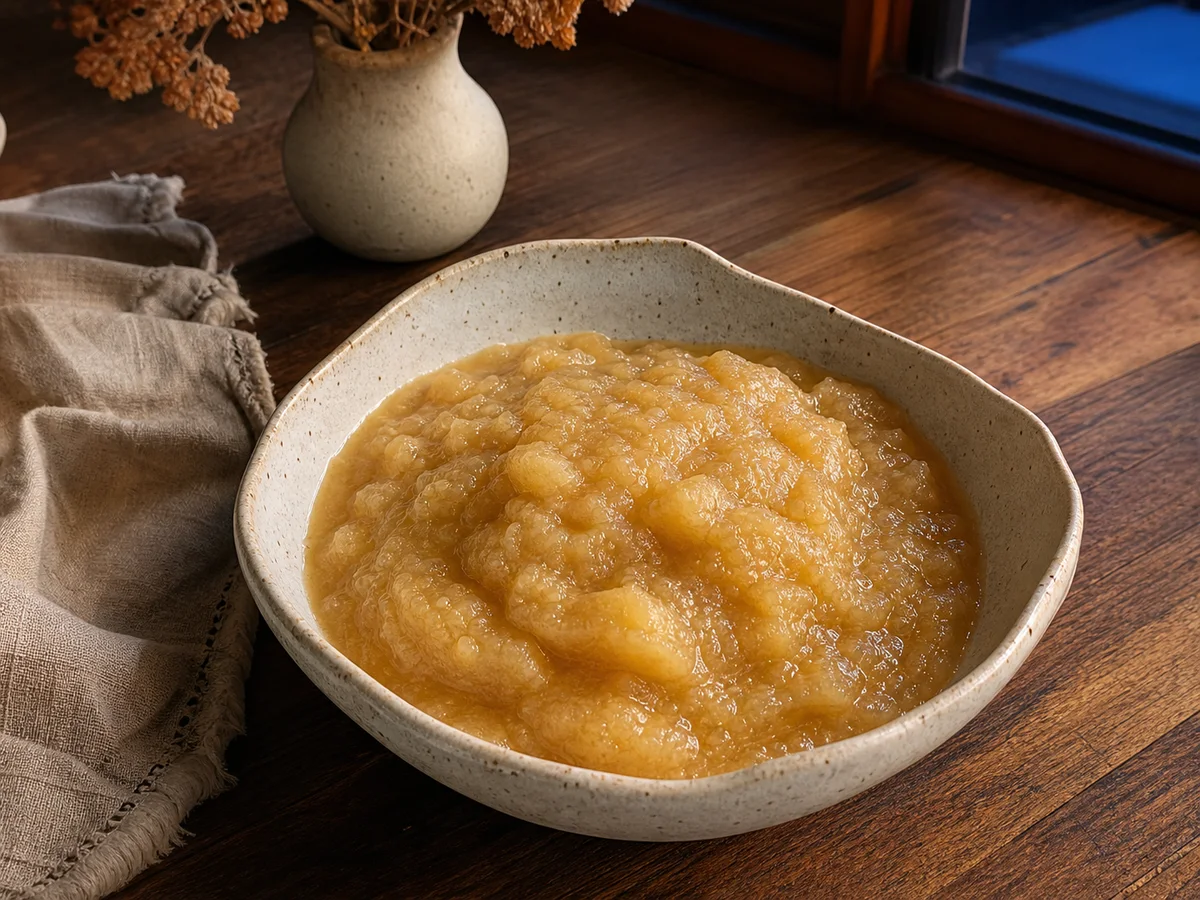
Apple sauce
Marion Harland’s original method for Apple sauce, retained as a source transcription for modern discovery.
Prep, cook, and serving values are clearly labeled editorial estimates. This transcription still needs a verified yield and modern kitchen adaptation before WorkLife will allow it to create a shopping cart.
From the cited source
Source ingredient cues
These cues were extracted from the historical method for discovery. Use the complete source method and citation alongside them.
- Wash two dozen firm, juicy apples and cut them—without peeling—into pieces.
- Put them into a porcelain-lined saucepan with a cupful of cold water and bring to a boil.
- Sweeten the apples to taste, and stir over the fire until the sugar is melted, but do not allow the mixture to boil.
- Add a teaspoonful of lemon juice and set aside until cold.
Historical transcription
Source method
- 1
Wash two dozen firm, juicy apples and cut them—without peeling—into pieces. Put them into a porcelain-lined saucepan with a cupful of cold water and bring to a boil. Cook steadily, stirring frequently, until the fruit is soft and broken into bits. Remove from the fire and run through a colander to free the sauce from all bits of skin. Sweeten the apples to taste, and stir over the fire until the sugar is melted, but do not allow the mixture to boil. Add a teaspoonful of lemon juice and set aside until cold. Apple sauce made in this way is better in flavor and color than that made from the peeled fruit. The best part of the apple is that lying close to the skin, and it consequently loses much of its flavor in the peeling.
- 2
If sealed up while hot this will keep through the winter and supply fresh apple sauce when the raw fruit is scarce and expensive.
Nutrition pending
No invented nutrition numbers.
WorkLife will publish nutrition and scalable serving quantities only after this historical transcription receives a measured modern adaptation.